The Bell Tower
A collapsible timber tower that keeps a closing garden’s surplus material in use, and six discarded iron plates that turned out to ring.
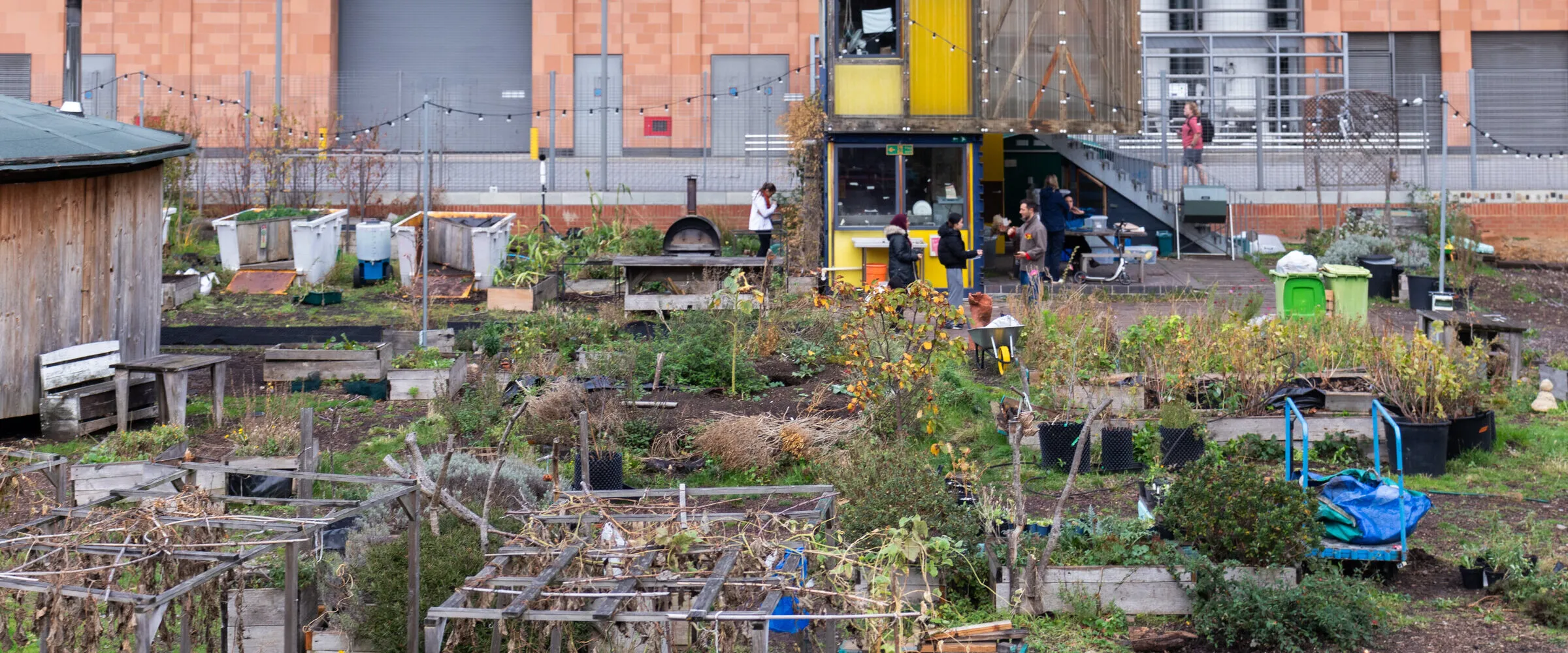
The Bell Tower is a proposition that uses the material surplus left by the Story Garden’s migration from Somers Town. Timber and manilla rope are assembled into a collapsible, portable structure. Six iron spacer plates, recovered from the site on closure, are revitalised as bells after the discovery of their resonant sonority when struck.
The proposal works within and against the precarity of meanwhile-use urbanism. When a temporary site migrates, its material ecology changes with it: something useful in one garden becomes surplus in the next, and limited storage makes rapid clearance look like prudence. At the point of transition, these materials are treated neither as space-occupying liability nor as recoverable commodity.
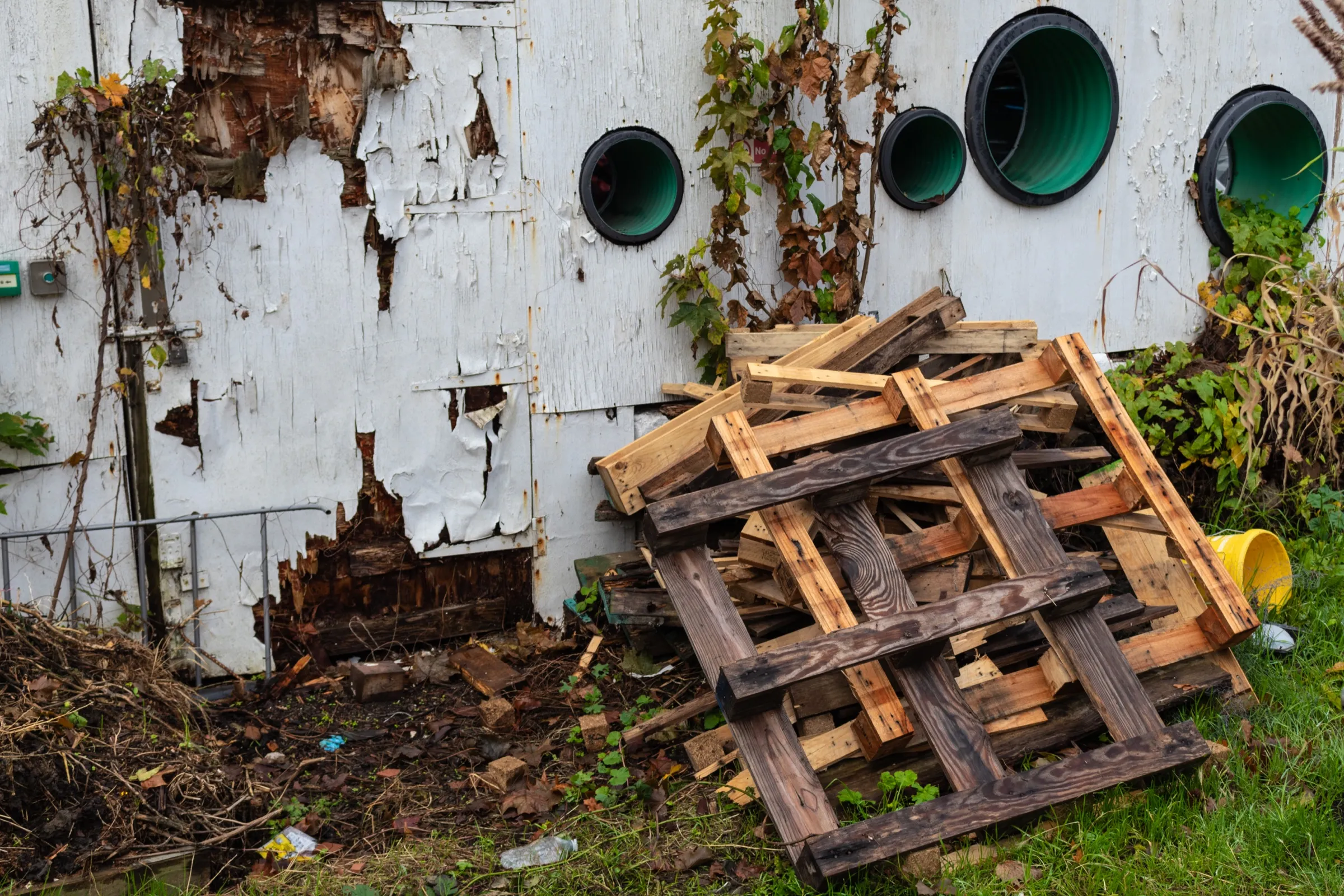
“The tower’s act of care is shielding these materials from the politics of waste.”
The design ethic follows from that: lashings over fixings, ropes over hardware, manual effort over power tools. The ladder-like frame folds for transport and can be raised without specialist equipment, and no material is permanently altered to build it. Where precarity incentivises the razor’s edge, reversibility and ease of disassembly let a meanwhile-use operator accumulate material capacity across several migrations rather than starting again at each one.
The bell assembly is made from a single continuous length of rope. Knots tied in the bight produce open loops for the plates, a chain sennit forms a wearable shoulder strap, and a stopper with an adjustable hitch fixes the assembly to the tower without retying anything. The weight of the plates keeps the system taut, so the bells can be carried, raised, removed and rearranged by hand, without tools or knot expertise.
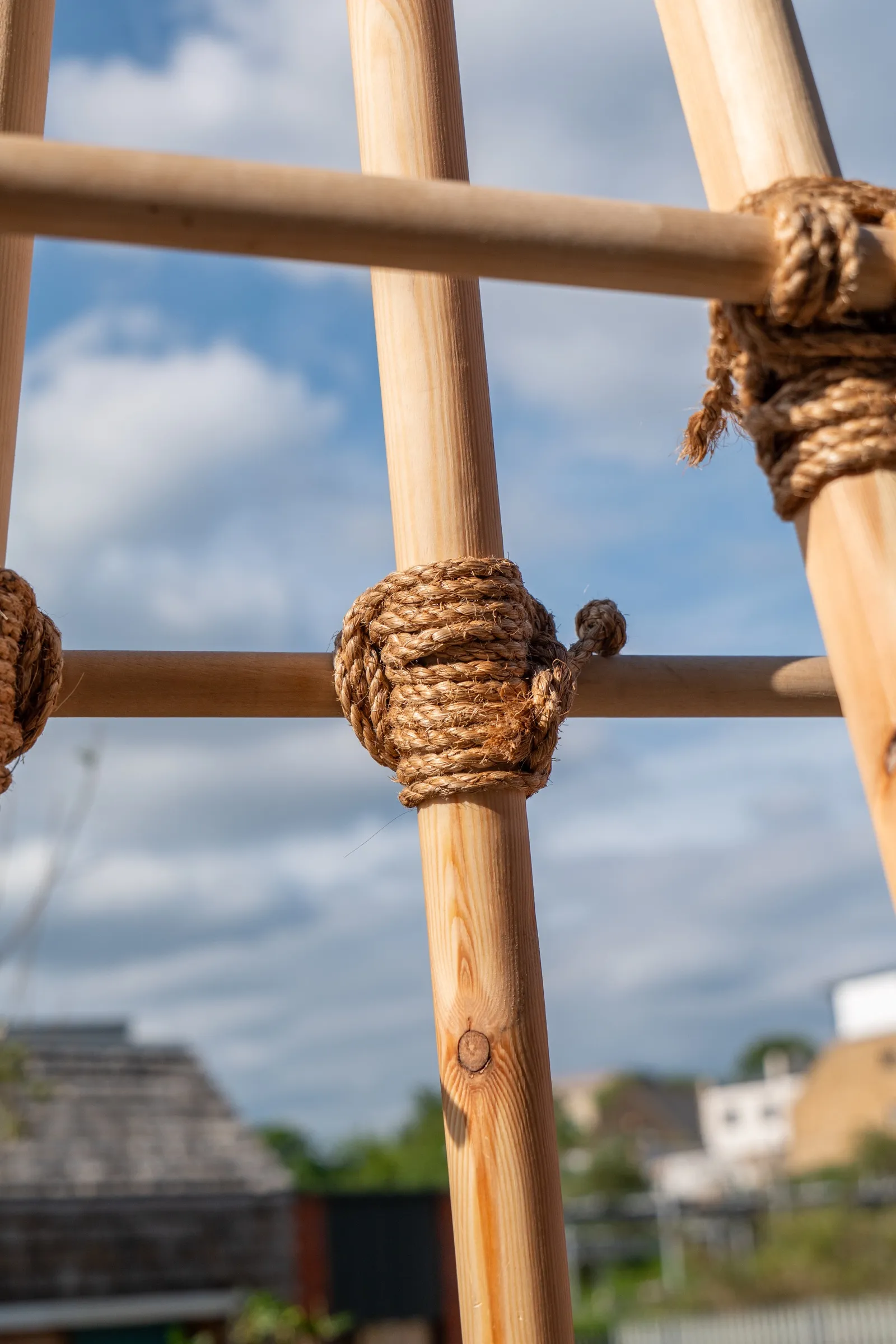
Carried between sites, the tower made its own scale and weight legible through the body, and left no permanent trace at either end. It also returned the project to a problem that drawings cannot resolve. Lashing depends on the grain and diameter of the wood, the condition of the rope, the weather, and the attention of the person tying it. These are embodied techniques, learned by doing and by attunement to the environment — which is why, for the Bell Tower and the design ethic beneath it, disseminating that knowledge is what remains.


- Design, fabrication and photography
- Dan Drumm
- Academic context
- The Bartlett, UCL